

Therapy for Asian-Americans in NYC
Virtual therapy for AAPI Asian American adults in New York & New Jersey
The weight of living between cultures sometimes looks and feels like holding your family's values in spaces not meant for you, with the quiet ache of belonging everywhere and nowhere at the same time.
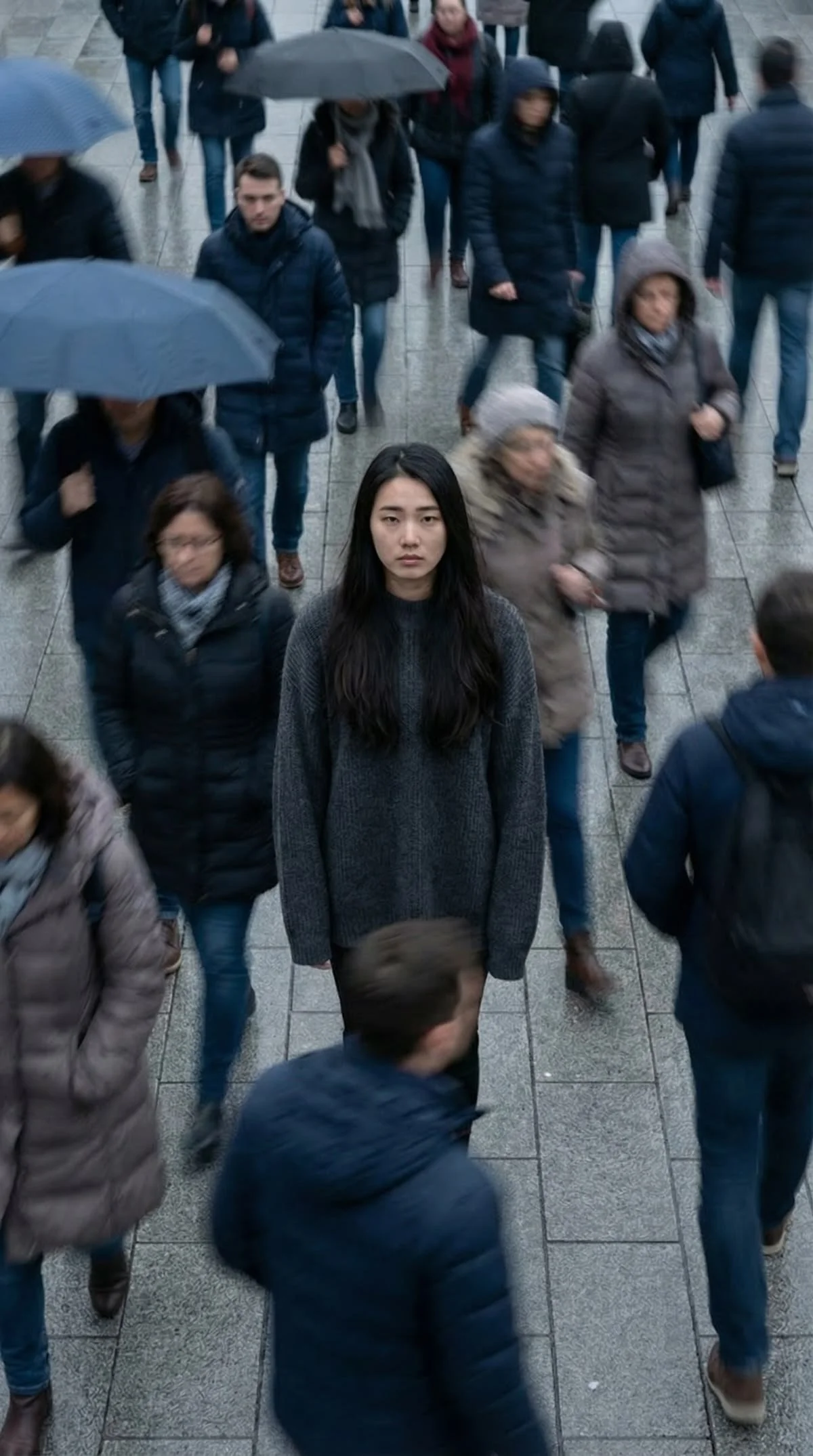
You might be looking for therapy for Asian Americans in NYC: someone who understands the cultural nuances that shape how you think, feel, and relate to others. As an Asian American therapist in New York, I work with adults who are balancing different worlds, carrying expectations, and trying to make sense of who they are outside of who they’ve had to be.
In one room you're too much. In another you're not enough. You've learned to read the space, adjust and code switch so seamlessly that it looks effortless from the outside. But it takes something from you every time.
There’s a version of you underneath it all that hasn't had much space to just... exist. If this feels familiar, you're not alone.
Living between worlds is its own kind of weight, and you've been carrying it for a long time.
What would it feel like to just be, without owing anyone an explanation?

What It Actually Feels Like to
Grow Up Between Two Worlds

For many Asian-Americans in NYC, that early training doesn't just stay in childhood. It becomes the architecture of how you move through the world as an adult:
Hypervigilance that kept you safe then but exhausts you now
People-pleasing so automatic you don't notice you're doing it
Difficulty knowing what you actually want versus what you were taught to want
Feeling that no matter how well you've built your life here, something remains unresolved
This is some of what therapy for Asian-Americans in NYC is designed to hold: not just the anxiety you can name, but the older, quieter weight underneath it. The grief of growing up having to choose between worlds. The exhaustion of never fully belonging in either. The parts of yourself you adapted away in order to survive, and the work of finding them again.
You've spent enough of your life translating yourself. Therapy with me is a place where you can allow yourself to just be.

WHAT IF THERAPY FOR ASIAN AMERICANS IN NYC CAN HELP YOU
DOES THIS SOUND FAMILIAR?
→ Show up as your full, unfiltered self without apology
→ Build a sense of belonging that starts from within
→ Honor your own path with compassion, not shame
→ Meet/reconnect with the self you've been hiding
→ Be seen and understood without having to prove anything
→ Feel at home in yourself, no matter where you are
Hiding parts of yourself to fit the room
Feeling caught between two worlds
Carrying guilt about family expectations
Wondering who you are beneath all the adapting
Translating yourself and over-explaining your identity
Belonging everywhere and nowhere at once
This is what culturally attuned therapy for Asian-Americans in NYC
can feel like when the fit is right.
You've been code-switching your whole life.
Therapy shouldn't be one more place you have to perform.

What Makes Therapy with an
Asian-American Therapist in NYC Different

When you work with a therapist who shares your cultural background, something shifts. You don't have to spend the first few sessions explaining why your parents' expectations feel impossible to disappoint, or why asking for help still feels like a betrayal of everything you were raised to be. The context is already there.
As an Asian-American therapist in NYC, I bring more than cultural familiarity to our work.
I understand:
The specific weight of immigrant family systems
The pressure of being the one who made it
The complexity of holding love and resentment for the same people at the same time.
This doesn't mean I assume your experience. Every family, every immigration story, and every cultural identity is different. What it means is that you won't have to translate yourself to be understood. We can start from the actual work faster.
What that can look like in practice:
Not having to explain the cultural context behind your family dynamics
Being able to name things in Cantonese or Mandarin when English doesn't quite capture it
Working with a therapist whounderstands model minority pressure from the inside
Every pattern you developed, the vigilance, the self-erasure, the need to manage how others see you, was your nervous system trying to keep you safe.
It worked. And now we get to help it rest.

STEP 01: WE SLOW DOWN AND GET TO KNOW YOU, THE REAL YOU
Therapy for Asian-Americans in NYC is a space where you don't have to code switch, perform, or explain. You are welcomed here just as you are

STEP 02: WE CONNECT THE DOTS BETWEEN PAST AND PRESENT
We explore your roots, family story, and cultural expectations. Understanding brings compassion, not blame.

STEP 03: WE BUILD AN IDENTITY THAT FINALLY FEELS LIKE YOURS
With clarity comes choice. You'll start to recognize what resonates and what no longer fits: by honoring your own voice, setting boundaries with love, and stepping into a self that's authentically yours.
Frequently Asked Questions
-
Yes. Supporting Asian-American, immigrant, and bicultural adults is a core part of my practice. I work with people navigating intergenerational pressure, cultural identity, belonging, and the particular kind of anxiety and burnout that can come from living between worlds. If you're looking for an AAPI therapist in NYC who understands this experience from the inside, I'd love to connect. Sessions are virtual and available to adults in New York and New Jersey.
-
No. While I have a specific focus on AAPI and immigrant experiences, I work with adults from a range of backgrounds navigating anxiety, identity, relationships, and burnout. If you're looking for a therapist in NYC who works with cultural identity and bicultural experiences more broadly, we may still be a good fit. What matters most is that the way I work resonates with what you're looking for.
-
I conduct sessions in English and Cantonese. I also have conversational Mandarin, so if there are words or phrases that feel more natural to express in Mandarin, we can work with that too. For many immigrant and bicultural clients in New York and New Jersey, being able to name something in the language you grew up speaking can make a real difference in the depth of the work. Sometimes the most important things don't translate cleanly, and you shouldn't have to force them to.
-
Yes, and this is one of the most common reasons people seek out therapy for Asian-Americans in NYC. Immigrant family stress isn't just about conflict or communication. It's the weight of obligation, the guilt of wanting something different, the exhaustion of being the bridge between generations, and the anxiety that comes from loving people whose sacrifices you can never fully repay. These are real, specific stressors that respond well to therapy when the therapist understands the cultural context they're rooted in. You don't have to reduce it to generic stress management to get help with it.
-
For many clients, especially those navigating bicultural identity, immigration, or intergenerational pressure, it means not having to explain the context from scratch. Things like family obligation, the pressure to succeed quietly, or the feeling of never fully belonging in either world, these don't need a lengthy backstory in our work together. That shared cultural fluency can make anxiety therapy feel safer and more effective, because we can get to what actually matters faster.

Therapy for Asian-Americans in NYC
& Across New York & New Jersey
Mindful Roots Collective offers therapy for Asian-Americans, immigrants, and international students across New York City, including Midtown, Tribeca, and Long Island City (Queens). Sessions are available via secure telehealth platform for residents of New York and New Jersey, including clients in Jersey City, Hoboken, Fort Lee, Palisades Park, Englewood, Tenafly, Edgewater, and across Bergen County, NJ
The experiences that bring people here rarely fit neatly into a single category. The pressure to perform. The exhaustion of never quite feeling like enough. The anxiety that hums quietly beneath a life that looks fine on the outside. These patterns show up across cultures, but they carry a particular weight when you're also holding questions of identity, belonging, and what you owe the people who sacrificed everything to get you here.
This work lives at the intersection of culture and anxiety.
If that resonates, you can read more about how I approach anxiety therapy here.
When you're ready, I'm here.
Questions?
Ready to Schedule a Consultation Call?
Fill out the form and I’ll get back to you as soon as possible.
I look forward to hearing from you!