

Postpartum Depression Therapy in NYC
Perinatal mental health support for new and expecting mothers in New York & New Jersey
Pregnancy and postpartum bring profound emotional shifts:
joy, fear, grief, overwhelm, and everything in between.
Even though this season is often celebrated, it doesn't always feel celebratory.
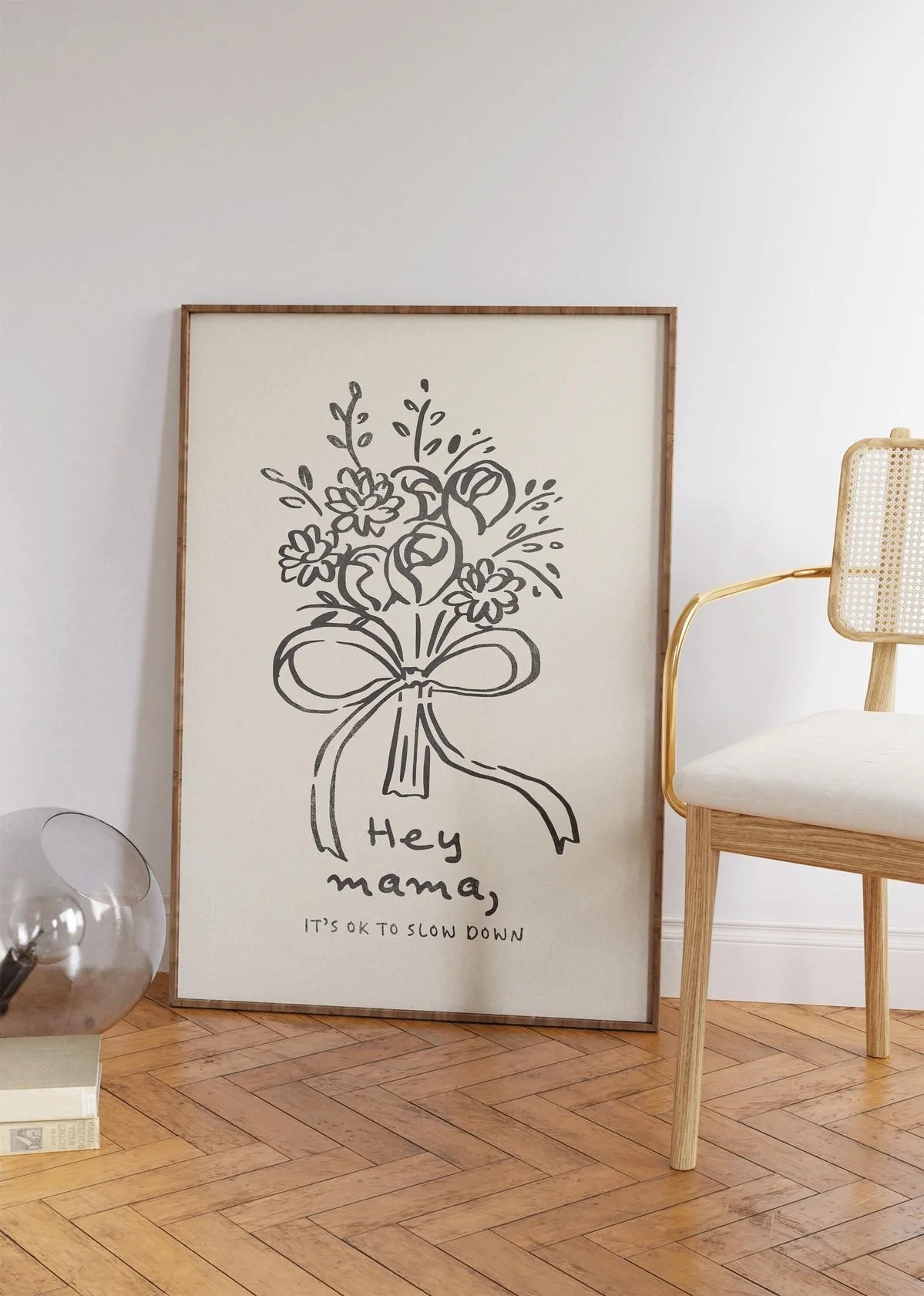
Everyone tells you this is supposed to be one of the most meaningful times of your life. And maybe part of you believes that. But another part of you is exhausted, overwhelmed, and quietly wondering why it doesn't feel the way it's supposed to.
You might be growing a baby while your anxiety is running at full volume. Or you've just given birth and instead of feeling the joy everyone expected, you feel disconnected, tearful, or like you don’t recognize yourself.And you're holding it together on the outside while something inside feels like it's unraveling.
The hardest part? You're not sure you're allowed to say that out loud.
There's so much pressure around this season - to be grateful, to feeling and looking like yourself again, to have it all figured out. It can make it really hard to admit that you're struggling, especially when everyone around you seems to be celebrating. For many people, what they're experiencing has a name: postpartum depression. And postpartum depression therapy in NYC is one of the most meaningful steps you can take toward feeling like yourself again.
If you've been feeling this way, you're not broken and you're not failing.
You've just been carrying a lot in a season that asks everything of you... and it's a lot to hold.
What would it feel like to finally have a space where you didn't have to pretend to be okay?

When the Hardest Part is that No One Can Tell From The Outside


Perinatal mood and anxiety disorders (PMADs) are the most common complication of pregnancy and the postpartum period, affecting up to 1 in 5 birthing people. And yet, so many people never seek support, often because what they're experiencing doesn't match the image of "postpartum depression" they had in their heads. (Postpartum Support International has a helpful overview of what PMADs include and what to look for.)
Perinatal anxiety and depression don't always announce themselves clearly. Part of what postpartum depression therapy in NYC addresses is exactly this: the quieter, harder-to-name versions of struggle that don't match what people expect. Sometimes they look like this:
⟡ You're standing in the nursery at 3am, baby finally asleep in your arms, and instead of feeling the softness of the moment, your mind is already racing through everything that could go wrong tomorrow.
⟡ You have a healthy baby, a partner who's trying, a mother who keeps saying you look great. And you smile and nod, and then you go to the bathroom and cry, and you're not even sure why.
⟡ You scroll through photos of your newborn searching for the feeling everyone talks about. The love is there, somewhere. But so is something heavier, and you don't have a name for it yet.
⟡ You snapped at your partner this morning over something small. The guilt from that is still with you at midnight, running on a loop alongside everything else you're convinced you're doing wrong.
⟡ During pregnancy you kept waiting to feel excited, but the worry was always louder. You rehearsed every possible thing that could go wrong, and no amount of good news from the doctor made it quiet.
⟡ You're surrounded by people who love you, and you have never felt more alone.
⟡ A thought crossed your mind, just for a second, that your baby might be better off without you. You pushed it away immediately, ashamed. But it was there. (That thought deserves a space to be spoken, not buried. You're not alone in having it.)
If any of this sounds familiar, it doesn't mean you're broken or a bad parent. It means you're struggling, and you deserve support.
What Anxiety & Depression Can Look Like in the AAPI & Immigrant Experience


For many Asian American, immigrant, and bicultural parents, the perinatal period comes with an additional layer that rarely gets named in mainstream conversations about maternal mental health
There are cultural scripts about what a good mother looks like, how much you should sacrifice, and how openly you're allowed to struggle. In many families, asking for help is still quietly equated with weakness. And when you add the pressure of navigating a medical system, a parenting culture, and family expectations that may all be pulling in different directions, the weight can feel enormous.
This might look like:
⟡ A mother-in-law or parent who moved in to help, and now you're managing their feelings on top of your own.
⟡ Feeling pressure to parent the way your family expects, while also trying to figure out what you actually want for your child.
⟡ Not wanting to "burden" anyone by admitting how hard this is, especially when people sacrificed so much to give you this life.
⟡ Finding it hard to access care because therapy still carries stigma in your community, or because you've never seen a perinatal therapist who understood your cultural context without needing it explained.
Matrescence: Becoming a Mother is its Own Kind of Identity Shift
There's a word for what happens to you when you become a parent: matrescence.
The term was first coined by anthropologist Dana Raphael in the 1970s, and brought back into wider conversation by reproductive psychiatrist Dr. Alexandra Sacks through her widely-read New York Times piece and TED Talk. Matrescence describes the developmental process of becoming a mother, a transition as profound and identity-altering as adolescence, and just as disorienting. And yet, unlike adolescence, our culture rarely makes space for it.
You are not the same person you were before. And you are not yet fully the person you are becoming. That in-between place, where you're grieving parts of your old self while trying to grow into this new one, is real, and it's hard.



This can look like:
⟡ You used to know exactly who you were. Now you catch yourself in the mirror and feel like a stranger, not quite the person you were before, not yet sure who you're becoming.
⟡ You're grieving things you also chose: the spontaneity, the career momentum, the version of yourself who could leave the house without a plan. The grief is real, and so is the guilt for feeling it.
⟡ You had an idea of the kind of mother you'd be. Gentle, patient, present. And then the baby arrived, and you discovered she's harder to find than you expected.
⟡ Everyone around you seems to be adjusting. You wonder if you're the only one still waiting to feel like yourself again.
Nothing is wrong with you. You are adjusting to this new season of life and postpartum depression therapy in NYC can help you find your footing in that in-between place, without pressure to arrive faster than you're ready.
HOW TO KNOW WHEN YOU NEED POSTPARTUM DEPRESSION THERAPY?
⟡ You feel overwhelmed, tearful, or numb more days than not, and wonder if this is just "normal" new parent exhaustion.
⟡ Anxiety constantly runs in the background: worries about the baby's health, your parenting, or worst-case scenarios you can't shake.
⟡ You're struggling to bond with your baby and feel guilty admitting it, like something must be wrong with you.
You may benefit from postpartum depression therapy in NYC if…
⟡ You're grieving the life you had before…your independence, your identity, your relationships, and the guilty for not being happier keeps creeping in
⟡ Cultural or family expectations are adding pressure: how you "should" feel, parent, or handle this transition.
⟡ You're carrying all of this silently, afraid that speaking up means you're failing or that no one will truly understand.
What if postpartum depression therapy in NYC could take you from…
Feeling overwhelmed and alone with your thoughts → Trusting that you're not broken, and reaching out actually helps
Struggling to bond with your baby → Allowing connection to grow at its own pace, without shame or pressure
Being consumed by worry and "what ifs" → Quieting the anxious noise and feeling more present with your baby
Grieving who you used to be → Making space for both grief and growth as you step into this new version of yourself
Carrying cultural or family expectations in silence → Naming what you truly need and honoring your own voice
Pretending you're fine while barely holding it together → Feeling genuinely supported, grounded, and more like yourself again
Your nervous system has been doing its job through one of the hardest transitions of your life. Here, we help it learn that you're allowed to put some of that down

step 1: We start by slowing down
your nervous system.
Before we can go deeper, your body needs to feel safe enough to do so. We'll begin with practical, grounding approaches that help settle the anxiety and overwhelm, so you have a little more room to breathe and be present in your own life and with your baby.

step 2: together, we untangle where your patterns came from.Together, we explore what this transition is bringing up for you: the fears, the grief, the identity questions, and the expectations, yours and everyone else's. Understanding where these responses come from brings compassion, not more pressure.

step 3: at your pace, we build new patterns that actually stickYou start to find your footing as the person and parent you're becoming. Not the version someone else expects, but one that feels genuinely like yours. The changes stop being something you understand intellectually and start being something you actually feel.
How EMDR, IFS & Somatic Therapy Support Perinatal Mental Health

Perinatal mental health care, including postpartum depression therapy in NYC, goes well beyond coping strategies. Lasting support means working with the full picture: your nervous system, your history, the parts of you that are scared or grieving, and the relational patterns that pregnancy and parenthood tend to surface.
EMDR is particularly effective for birth trauma and for the anxiety that often traces back to earlier experiences of feeling unsafe, out of control, or not enough. Rather than just talking through what happened, EMDR helps your nervous system process and release what it's been holding, so the past stops intruding on the present.
Internal Family Systems (IFS) helps you get curious about the parts of yourself that are overwhelmed, perfectionistic, or quietly terrified. Often, the harshest inner critics around parenting have been trying to protect you for a long time. When those parts feel understood rather than pushed away, something shifts.
Somatic and mindfulness-based approaches help you reconnect with your body, which often becomes a complicated place during and after pregnancy. We work gently with the body's signals, rather than overriding them.
I also draw from CBT and psychodynamic approaches depending on what you need, because the work should fit you, not the other way around

-
Postpartum depression and postpartum anxiety are both common perinatal mood disorders, but they feel different. Postpartum depression often shows up as persistent sadness, numbness, difficulty bonding, loss of interest in things you used to enjoy, or a sense that you're just going through the motions. Postpartum anxiety tends to feel more like constant worry, racing thoughts, difficulty sleeping even when the baby sleeps, physical tension, and a sense that something terrible is about to happen. Many people experience both at the same time. Both are treatable, and both are things I work with regularly in perinatal therapy in NYC.
-
Yes. Anxiety during pregnancy, sometimes called prenatal or antenatal anxiety, is very common and often goes unrecognized because the focus tends to be on the physical aspects of pregnancy. You might find yourself consumed by worry about the baby's health, your birth experience, or whether you'll be a good parent, even when everything looks fine medically. Prenatal therapy can help you slow down, process what this transition is bringing up, and build a foundation of support before the postpartum period begins. Many of my clients start therapy during pregnancy and continue postpartum.
-
It varies. Without support, postpartum depression can persist for months or longer. With treatment, many people begin to notice meaningful shifts within weeks, though the timeline depends on the individual, the severity of symptoms, and the approach. Postpartum depression is not something you simply have to wait out, and it is not a reflection of your love for your baby or your capacity as a parent. Postpartum depression therapy in NYC, particularly approaches like EMDR and IFS that work beneath the surface, can support real and lasting change rather than just symptom management.
-
PMAD stands for perinatal mood and anxiety disorder, an umbrella term that includes postpartum depression, postpartum anxiety, perinatal OCD, birth-related PTSD, and other mood-related conditions that can occur during pregnancy or the postpartum period. PMADs are the most common complication of childbirth, and they are treatable. If you're struggling consistently and it's affecting your sleep, your relationships, your ability to function, or your sense of self, it's worth speaking with a perinatal mental health professional. I work with the full range of PMADs in my NYC perinatal therapy practice.
-
Both. Prenatal therapy is a valuable space to process anxiety about birth, prepare emotionally for the identity shift ahead, work through relationship changes, or address mental health concerns before the postpartum period begins. Many of my clients start during pregnancy and continue into the postpartum period. Whether you're newly pregnant, in the thick of the fourth trimester, or a year postpartum and still not feeling like yourself, there's a place for this work.
Frequently Asked Questions


Serving Clients Across NYC & New Jersey
Mindful Roots Collective offers postpartum depression therapy in NYC for adults across New York City, including Manhattan, Brooklyn, and Long Island City (Queens). Sessions are available via secure telehealth platform for residents of New York and New Jersey, including clients in Jersey City, Hoboken, and across Northern New Jersey.
Many of the people I work with are navigating the emotional weight of new parenthood, the pressure to feel a certain way, the guilt of struggling in silence, and the quiet grief of a self that feels harder to find than it used to. As a Hong Kong-born, multilingual therapist, I also support AAPI and immigrant parents who are carrying the added layer of cultural expectations and family pressure through this transition.
You are still in there. The version of you that isn't just surviving this season, but actually inhabiting it. Let's find her together.
Questions?
Ready to Schedule a Consultation Call?
Fill out the form and I’ll get back to you as soon as possible.
I look forward to hearing from you!